 SHORNAS BLOG
What Is Online Advertising? Types of Ads and How They Work
New to online advertising? Learn what it is, the main types of ads, how advertisers and publishers earn and pay, and how to start a small campaign wisely.
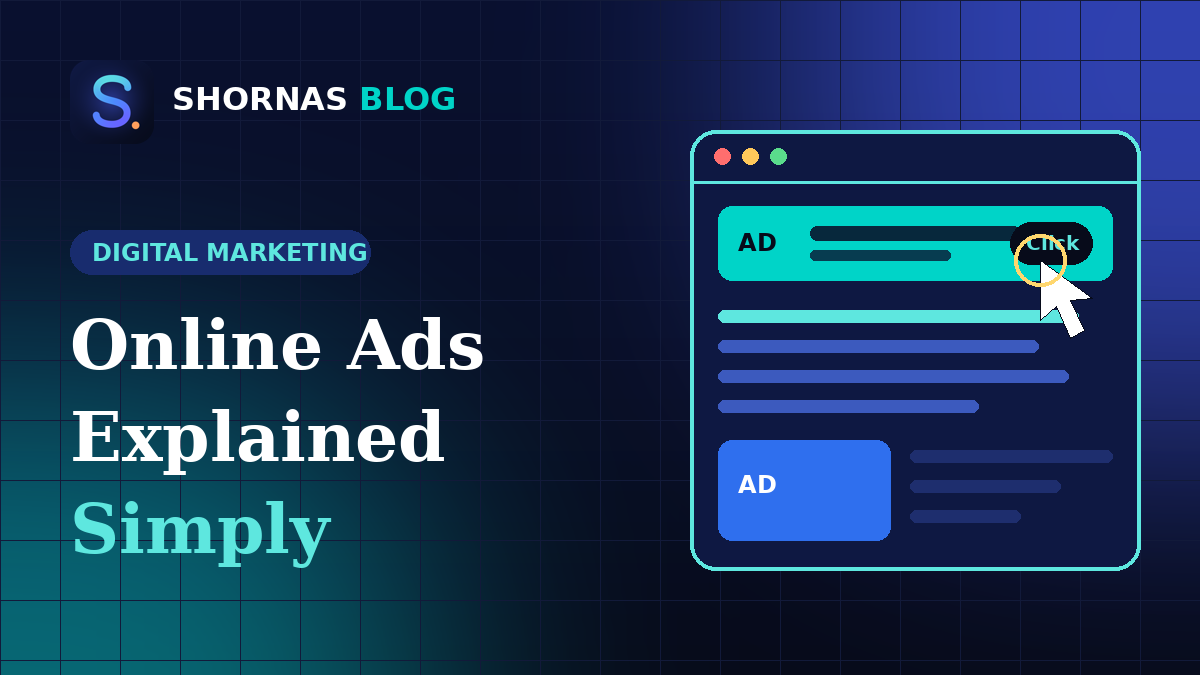
Every day you see ads on websites, apps, videos and social media. Behind each one is a simple idea: a business pays to show a message to people who might be interested, and a website or app owner earns by showing that message. This guide explains how online advertising works in plain language.
What is online advertising?
Online advertising is the practice of promoting a product, service or idea through the internet. Instead of paying for a billboard or a newspaper space, businesses place ads on websites, search results, social platforms and apps, and can aim them at specific groups of people.
Who is involved?
Advertisers are the businesses or people who want to promote something and pay for the ad.
Publishers are the website, blog or app owners who show ads on their pages and earn from them.
Ad networks and platforms connect advertisers with publishers, deliver the ads and measure the results.
Audiences are the people who see the ads.
Common types of online ads
Display and banner ads
These are images or animated boxes that appear in set places on a web page, such as the top, the side or between paragraphs. They are useful for building awareness of a brand or product.
Search ads
When you search for something, the first few results may be ads that match your words. They appear when someone is actively looking for something, which can make them very relevant.
Social media ads
Social platforms let advertisers target people by interests, location, age range and behavior, depending on the platform's rules. These ads can appear in feeds, stories or short videos.
Video ads
Short ads before, during or after a video. They are good for storytelling and showing a product in action.
Native ads
These match the look of the page they appear on, such as a recommended article box. They should always be clearly labeled as sponsored or advertisement.
Email and push notification ads
Messages sent directly to people who agreed to receive them. They work best when they are useful and not too frequent.
How are ads paid for?
CPC (cost per click): the advertiser pays when someone clicks the ad.
CPM (cost per thousand impressions): the advertiser pays for every thousand times the ad is shown.
CPA (cost per action): the advertiser pays only when a specific action happens, such as a signup or purchase.
Prices vary by country, audience, season and competition, so always check the platform's current rules and rates.
How advertisers can start a small campaign
1. Set a clear goal, such as more website visits, signups or sales.
2. Know your audience. Decide who would truly benefit from your offer.
3. Choose an ad type and platform that fit your goal and budget.
4. Write a clear message with a simple headline and one clear action.
5. Start with a small budget and test two or three versions of your ad.
6. Measure results such as clicks, conversions and cost per result, then improve.
If you are an advertiser looking for a network to try, you can explore Shornas Ads and create an advertiser account to see what is available.
How publishers can earn from ads
If you own a blog or website, you can display ads and earn a share of the revenue. To do this well, publish helpful content, attract steady visitors, choose a reputable ad network and read its policies carefully. Place ads in a way that does not annoy readers or hide your content. Publishers can also look at Shornas Ads to see how a publisher account works. Never click your own ads and never ask others to click them, because this is against the rules of almost every network.
What makes a good ad?
A clear promise: say what the person gets.
Simple wording: avoid long, confusing sentences.
A strong call to action: tell people what to do next, such as "Learn more."
Honesty: do not exaggerate or mislead.
A matching landing page: the page people reach should deliver what the ad promised.
Common mistakes to avoid
Targeting everyone. A message for everyone usually speaks to no one.
Spending a lot before testing. Start small and learn first.
Misleading ads. They damage trust and can break platform rules.
Ignoring mobile users. Most people see ads on their phones.
Not tracking results. Without data, you cannot improve.
Final thoughts
Online advertising connects people who have something to offer with people who may need it. Whether you are an advertiser or a publisher, success comes from clear goals, honest messages, good user experience and steady testing. Start small, learn from the numbers and grow step by step.

Comments (0)