 SHORNAS BLOG
Work-From-Home Job Scams: 10 Warning Signs and How to Stay Safe
Learn the 10 warning signs of fake online jobs, from upfront fees to fake checks and task scams, plus how to verify a job offer and where to report it.
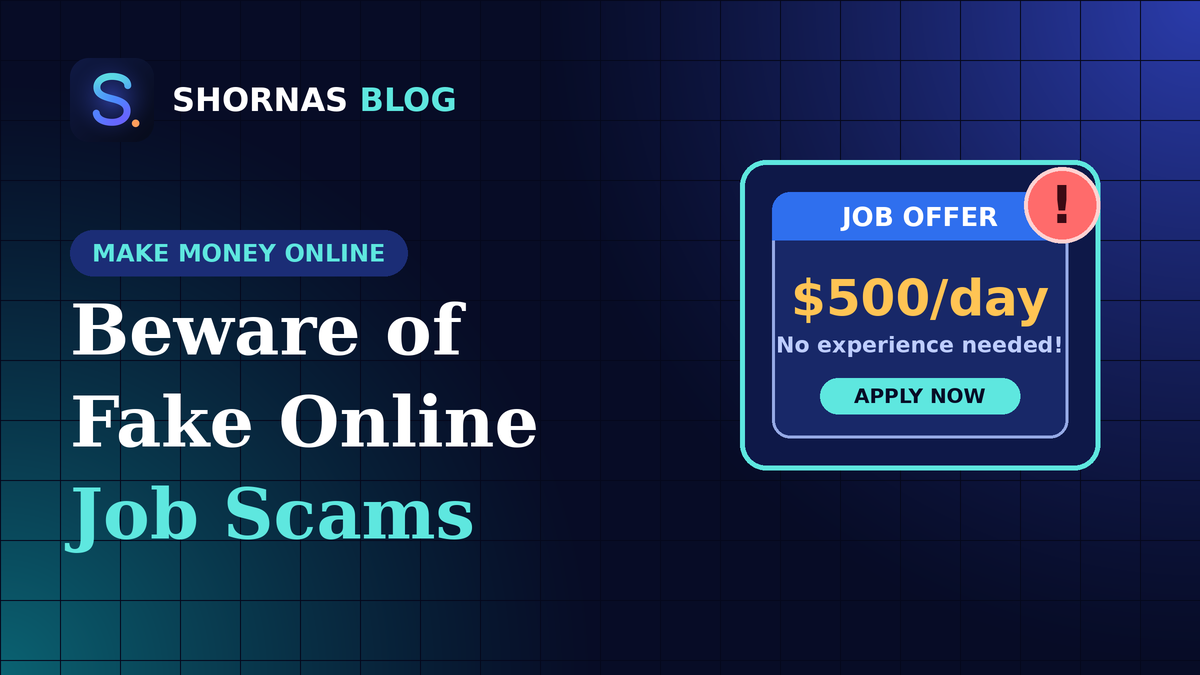
Working from home sounds perfect: flexible hours, no commute and a steady income. Scammers know how many people are searching for exactly this, so fake job offers appear on social media, messaging apps and even on real job sites.
The good news is that most fake jobs share the same warning signs. This guide shows you what to look for and how to check an offer before you share any personal details or money.
Why Job Scams Are So Common
Job scammers want two things: your money and your information. They may ask you to pay for training, steal your identity documents, use your bank account to move stolen money, or simply make you do unpaid work. Anyone can be targeted, especially students, new graduates and people who recently lost a job.
10 Warning Signs of a Fake Online Job
1. You Must Pay to Get the Job
A real employer pays you. If someone asks you to pay for training, a starter kit, "registration", background checks or software before you start, it is almost certainly a scam.
2. The Offer Comes Out of Nowhere
Be careful with unexpected messages on WhatsApp, Telegram, SMS or social media saying you were "selected" for a job you never applied for. Real recruiters usually contact you about an application you made or a profile you posted.
3. No Interview or a Very Fast Hire
If you are hired within minutes through a chat, with no real interview and no questions about your skills, be suspicious.
4. Pay That Is Too High for Easy Work
Offers like "earn a large daily income by liking videos, rating products or typing a few minutes" are classic bait. Real pay matches the skill and time needed.
5. Vague Job Details
If you cannot find a clear job title, tasks, working hours, company name or location, the offer is not trustworthy.
6. Requests for Personal or Banking Details Too Early
Never give your ID card, passport, bank card or online banking details at the start. A genuine employer only needs these after a signed offer, and only through a secure official process.
7. The Fake Check or Overpayment Trick
You receive a payment or check, and are told to keep part of it and send the rest to someone else for "equipment" or "expenses". The original payment later turns out to be fake, and you lose your own money.
8. Task Scams That Ask You to Deposit Money
You are paid small amounts for easy online tasks, then told to "top up" or deposit money to unlock bigger rewards. Each deposit is lost. This is a very common modern scam.
9. Using Your Bank Account to Move Money
Jobs such as "payment processor", "finance assistant" or "package handler" that ask you to receive and forward money or parcels can turn you into a helper for criminals, even if you did not know.
10. Poor Communication and Pressure
Be careful with free email addresses instead of a company email, messages full of spelling mistakes and pressure such as "Reply in 10 minutes or lose the job".
How to Check If a Job Is Real
- Search the company name with words like "scam", "reviews" or "complaints".
- Visit the official website by typing the address yourself, and look for the same job on their careers page.
- Check the email address. It should end with the company's own domain.
- Look up the recruiter on professional networks and see if they truly work there.
- Ask for a written contract that includes pay, duties, working hours and employer details.
- Talk to someone you trust before you decide.
Safer Ways to Find Online Work
- Use well-known job boards and freelance platforms, and keep all communication inside them.
- Apply directly through company websites.
- Learn a skill, then start small as a freelancer. Read how to start freelancing for beginners.
- Explore realistic options in our list of the best online jobs from home.
- If you own a website, app or Telegram channel, you can also earn from advertising. You can explore Shornas Ads as one option.
What to Do If You Think You Were Scammed
- Stop all communication and do not send any more money.
- Save screenshots, messages, payment receipts and the job post.
- Contact your bank or payment provider quickly, and ask them to stop or review payments.
- Change passwords and enable two-step verification. See how to protect your online accounts.
- Report the scam to the platform where you found it and to your local police or consumer protection authority.
- If you shared your ID documents, ask your local authority how to protect against misuse.
Frequently Asked Questions
Are all work-from-home jobs scams?
No. Many genuine remote jobs exist. The difference is that real employers do not ask you to pay and they follow a normal hiring process.
Can a job on a famous website still be fake?
Yes. Scammers also post on real job sites, so always check the company and never pay.
Is it safe to share my resume?
Usually yes, but keep your ID numbers, full address and bank details out of it until you are sure the employer is real.
Is every "task" job a scam?
Be very careful with any job where you must deposit money to continue. Real work never asks you to pay in order to earn.
Related Guide
Scammers also use fake investment offers. Learn the signs in our guide to how to spot investment scams.
Final Thoughts
A real job pays you, it does not charge you. If an offer is urgent, vague or too good to be true, slow down and verify. A few minutes of checking can save you from losing money and personal information.


Comments (0)